Guest post by Lucy Harbor
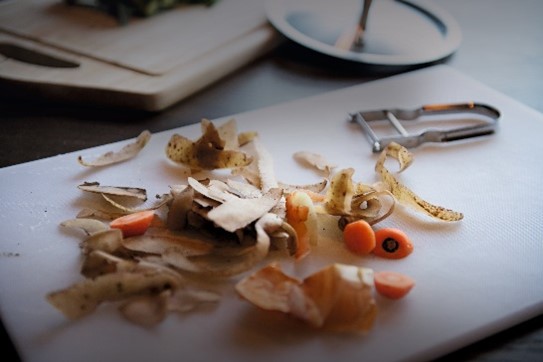
From left over dinner to the tops of carrots and tea bags, we all throw away food. But have you thought about just how much food waste goes in your bin every day?
Spoiler, it’s probably more than you think, in fact up to a third of waste placed in our bins is food. The good news is that all households across East Sussex began receiving weekly food waste collections this month (April).
Basically, these changes aim to make recycling simpler and more consistent across the country.
Why food waste collections are being introduced
Food waste makes up around 36% of the average household rubbish bin in East Sussex, with each household generating nearly 2kg of food waste every week. This would normally be sent to energy recovery where it is converted into electricity.
However, by collecting food waste separately, we can turn it into nutrient-rich soil conditioner used on local farms and available for residents to buy at local recycling sites. We do this by sending the food waste to Veolia’s Woodlands In-Vessel Composting Facility.
What you will receive
The new food waste collection scheme means that every household will be provided with a food waste starter pack, delivered by your district or borough council. This will include:
- A kitchen caddy (5 litres) which you can keep indoors and put your food waste in as you go
- A roll of compostable liners for your bin, to get you started (liners must display the seedling logo and meet EN 13432 standards)
- An outdoor food waste bin (23 litres) for weekly collection that is animal-proof
Residents living in flats will soon receive access to communal food waste bins.
When food waste collections start in your area
Delivery of containers is already underway across remaining areas in East Sussex, with full collection services beginning between late March and April 2026 depending on where you live. In Lewes collections already take place.
Each household will receive a letter confirming when collections start. After that, all food waste will then be collected weekly, on the same day as your usual recycling day.
You can check updates and start dates on your local council’s website.
-
- Rother: Rother District Council
- Hastings: Hastings Borough Council
- Wealden: Wealden District Council
- Eastbourne: Lewes and Eastbourne Councils
What you can put in your food waste caddy
Accepted
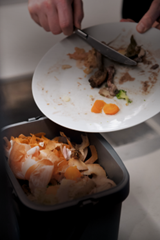
- Uneaten food and plate scrapings
- Fruit & vegetable peelings
- Bread, pasta, rice, beans
- Dairy products & eggshells
- Meat, fish & bones (raw or cooked)
- Tea bags & coffee grounds
- Cut flowers & houseplants
Not accepted
- Plastic bags & cling film (even biodegradable)
- Food packaging of any kind
- Coffee cups
- Liquids & cooking oil
- Nappies, wipes, cutlery, crockery
- Garden waste
- Animal waste or bedding
- Compostable packaging (even if labelled compostable)
What happens to the food waste after it’s collected?
Once collected, Food waste from East Sussex is taken to Veolia’s Woodlands composting facility, where it is:
- Mixed with garden waste
- Placed in sealed, temperature-controlled tunnels
- Broken down by microbes at up to 70°C
- Transferred to a maturation hall
- Turned into high-quality soil conditioner.
This process ensures harmful germs are killed and subsequently produces a useful product that supports local agriculture.
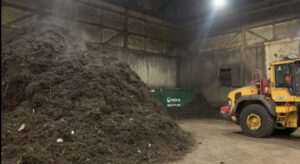
Veolia’s Woodlands composting facility
Other recycling changes coming in April 2026
From 1 April 2026, you will also be able to recycle food and drink cartons (like Tetra Pak). Please ensure these are empty before they go in your recycling. Want to double check what else you can and can’t recycle? Check out: What you can recycle and where
Interested to find out what happens to the rest of your recycling? Watch the journey here: What happens to your recycling in East Sussex?
Where to find out more
Head over to our webpages to find out more about food waste collections.
What else can we do with food waste?
Composting at home is another great way to deal with some types of food waste like fruit and vegetable peelings, and it produces compost that you can use at home on your garden. You can find advice here: Composting